Canceling a car insurance policy may sound simple, but there are several details worth checking before you ask Progressive to end your coverage. Your cancellation date, remaining premium, payment status, replacement insurance, and state requirements can all affect what happens next.
If you have a policy with Progressive and are thinking about switching insurers, selling your vehicle, moving to another state, or simply no longer needing coverage, understanding the cancellation process can help you avoid unnecessary charges or an accidental gap in insurance.
This guide explains how Progressive car insurance cancellation generally works, what to consider before ending a policy, whether a refund may be available, and what drivers in the United States and United Kingdom should understand about insurance cancellation more broadly.
What Does Canceling a Progressive Policy Actually Mean
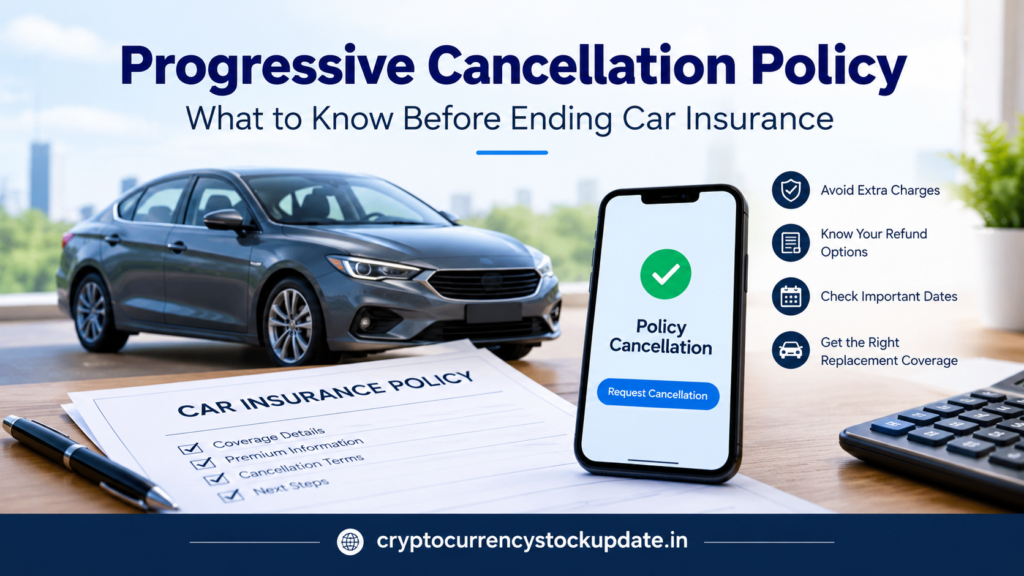
When you cancel a Progressive auto insurance policy, you are asking the insurer to terminate your coverage from a specific date.
That does not necessarily mean your policy ends immediately when you make the request. The effective cancellation date matters because you remain responsible for maintaining legally required insurance until coverage officially ends.
For example, if you are replacing Progressive with another insurer, the safest approach is usually to make sure the new policy is active before the old policy terminates. This helps prevent an uninsured period.
The exact process, available cancellation methods, and any applicable charges can depend on your policy, state, payment arrangement, and the reason for cancellation.
Why Drivers Commonly Cancel Progressive Insurance
People cancel car insurance for many different reasons. A lower premium is one of the most common, but it is far from the only reason.
Some drivers switch insurers after receiving a better quote elsewhere. Others sell a vehicle, stop driving, move to a different location, combine multiple insurance policies, or become dissatisfied with their current coverage.
Before canceling, it is worth identifying the actual reason for the change. If the problem is price, for instance, changing deductibles or adjusting optional coverage could potentially reduce the premium without completely changing insurers.
Progressive Cancellation Options at a Glance
| Situation | What to Check Before Cancellation |
|---|---|
| Switching insurers | Make sure replacement coverage starts first |
| Selling your vehicle | Confirm whether you still need another policy |
| Moving states | Check whether a new policy or policy update is required |
| Vehicle no longer used | Consider whether storage or non-driving coverage is appropriate |
| High premium | Compare quotes before terminating current coverage |
| Policy payment issue | Check outstanding balance and cancellation terms |
| Multiple vehicles | Confirm how removing one vehicle affects the remaining policy |
| No longer owning a car | Check whether another form of insurance is still useful |
How to Cancel Progressive Car Insurance
The most appropriate way to cancel depends on your policy and circumstances. Progressive provides policy-management and customer-service options through its official channels, and the company may require information to verify the request.
Before making the cancellation request, have your policy information available and decide the date on which you want coverage to end.
It is also a good idea to keep confirmation of the cancellation. A written confirmation, policy record, or other documentation can be useful if a billing question arises later.
If you are changing insurers, do not rely solely on the date you requested cancellation. Confirm both the end date of Progressive coverage and the effective date of your replacement policy.
How to Cancel Progressive Insurance: A Simple Step-by-Step Guide
Can You Cancel Progressive Insurance at Any Time
In many situations, policyholders can request cancellation before the normal policy expiration date. However, the financial and administrative consequences can vary.
Insurance policies are contracts, and cancellation rules are influenced by state regulations and the terms that apply to your specific policy.
That is why it is better to think of cancellation as a process rather than simply switching off a service.
Before ending coverage, check your policy documents and confirm the effective cancellation date with Progressive.
Will Progressive Charge a Cancellation Fee
Whether a cancellation fee applies can depend on the policy and the state in which the insurance is issued.
Some insurers may charge a cancellation-related fee in certain circumstances, while others may calculate the remaining premium differently. State insurance rules can also restrict how cancellation charges are handled.
Because of these differences, there is no single cancellation-fee amount that applies to every Progressive customer.
If cost is your main concern, ask Progressive for the exact financial impact of canceling on your selected date before completing the cancellation.
Can You Get Money Back After Canceling Progressive Insurance
A refund may be possible when you have paid for insurance beyond the date on which your coverage ends.
For example, suppose your premium has already been paid for a future period and you cancel before that period is fully used. The unused portion may be eligible for a refund, depending on the policy terms and applicable rules.
However, a refund should not automatically be assumed. Outstanding balances, adjustments, fees, claims, or other account activity can affect the final amount.
The best way to know what you will receive is to request a final account calculation from the insurer.
What Happens If You Switch to Another Insurance Company?
Switching insurers is one of the most common reasons people cancel Progressive coverage.
The important thing is to avoid a gap between the two policies.
A practical sequence is:
- Compare quotes from other insurers.
- Select the coverage that meets your needs.
- Confirm the new policy’s effective date.
- Make sure the replacement policy is active.
- Arrange the Progressive cancellation for the appropriate date.
- Save confirmation from both insurers.
Even a short uninsured period can create financial and legal problems depending on where you live.
Do Not Cancel Just Because Another Company Gives a Lower Quote
A cheaper premium does not automatically mean a better insurance policy.
When comparing Progressive with another insurer, look beyond the monthly price. Check liability limits, collision and comprehensive coverage, deductibles, uninsured motorist protection, rental coverage, roadside assistance, exclusions, and other policy features that matter to you.
A quote that looks cheaper on the first screen could provide substantially less protection.
The better comparison is often coverage versus total cost, rather than price alone.
What If You Sold Your Car
Selling a vehicle does not always mean you should immediately cancel every insurance policy you have.
If you still own another vehicle, your existing policy may need to be updated rather than completely canceled.
If you no longer own a vehicle at all, your future insurance needs can be different. In some situations, maintaining a form of insurance may be useful depending on your circumstances and whether you expect to drive a vehicle belonging to someone else.
Before canceling, explain your situation to the insurer and ask what coverage options apply.
What If You Are Moving to Another State
Moving can change your insurance requirements.
Instead of simply canceling Progressive and leaving it at that, contact the insurer and explain that you are moving. Your policy may need to be rewritten or replaced based on the new state.
Different states have different insurance requirements, so a policy that was appropriate in one state may not automatically meet the requirements of another.
Updating your address and insurance situation promptly can help prevent administrative problems.
What Happens If You Stop Paying Instead of Canceling
Stopping automatic payments is not the same thing as properly canceling an insurance policy.
If you simply stop paying, the insurer may eventually cancel the policy for nonpayment. That can create complications, including an unpaid balance or a record of cancellation for nonpayment.
If you no longer want coverage, formally request cancellation rather than assuming missed payments will handle everything.
This is particularly important if you are moving to another insurer because you want the old policy to end cleanly and the new policy to begin without a gap.
How Cancellation Can Affect Your Insurance Record
Canceling an insurance policy does not automatically mean you have done anything wrong. People change insurers regularly.
However, future insurers may ask about your previous coverage history. A cancellation because you switched companies is very different from a policy ending because of repeated nonpayment.
Maintaining continuous insurance coverage when you own and operate a vehicle can therefore be valuable for both legal compliance and financial protection.
Progressive Cancellation and Automatic Payments
If you use automatic payments, cancellation does not mean you should ignore your bank or payment account.
After receiving confirmation that the policy has ended, review your account to make sure future scheduled payments are handled correctly.
Keep your final statement and cancellation confirmation until you are satisfied that the account has been fully settled.
This simple step can help prevent confusion if a payment appears after the cancellation date.
What Should You Keep After Canceling
Keep records related to the cancellation, including:
- Cancellation confirmation
- Final billing statement
- Refund information, if applicable
- Payment records
- Details of the replacement policy
- Correspondence regarding the cancellation
These documents may be useful if you later need to explain when your previous coverage ended.
Progressive Insurance Cancellation: Important Points to Remember
The cancellation process can look different depending on the customer’s state, policy type, billing arrangement, and reason for ending coverage.
Before canceling, confirm the exact termination date, ask about any remaining balance or refund, and make sure you have appropriate replacement coverage if you still need insurance.
If you are selling your vehicle or moving, do not assume that immediate cancellation is automatically the best option. Your circumstances may require a policy change instead.
Most importantly, never create an uninsured gap simply to make the switch between insurers easier.
Progressive Cancellation Policy for UK Readers
Progressive is primarily associated with the United States insurance market, so UK drivers should not assume that Progressive’s U.S. auto insurance rules apply to UK motor insurance.
In the United Kingdom, cancellation rights, cooling-off periods, administration charges, refunds, and policy terms can depend on the insurer and the specific contract.
UK drivers should therefore check the cancellation section of their own insurance policy rather than applying U.S. insurance rules to a UK policy.
The same basic principle applies in both markets: understand the cancellation date, any financial adjustment, and whether replacement insurance is required before ending your current cover.
Can I cancel Progressive car insurance whenever I want?
Cancellation may be available before the policy’s normal expiration date, but the exact process and financial consequences depend on the policy and applicable state rules. Confirm the effective cancellation date directly with Progressive.
Will Progressive refund unused insurance premium?
A refund may be available if you have paid for coverage beyond the cancellation date, but the final amount depends on your account, policy terms, and any applicable charges or outstanding balance.
Is there always a cancellation fee with Progressive?
No single fee applies to every policyholder. Cancellation charges can depend on state regulations and the terms of the specific policy.
Should I cancel Progressive before buying another insurance policy?
Usually, it is safer to arrange the replacement policy first and confirm that it is active before your Progressive coverage ends. This helps avoid an accidental gap in insurance.
Does canceling Progressive insurance hurt my credit score?
Simply switching insurers does not normally mean that your credit score will be harmed. However, unpaid insurance-related debts or other financial issues can create separate problems, so make sure your final account is properly settled.
Final Takeaway
Canceling Progressive car insurance is more than simply ending a monthly payment. The cancellation date, replacement coverage, refund, outstanding balance, and local insurance requirements can all matter.
If you are planning to leave Progressive, compare the complete coverage offered by your next insurer and make sure the transition is properly timed. Keeping clear records of the cancellation and final payment can also save you trouble later.
Disclaimer: This article is provided for general informational purposes and does not constitute legal, financial, or insurance advice. Insurance rules, cancellation terms, fees, and coverage requirements can vary by state, policy, and individual circumstances. Always review your policy documents and confirm the applicable terms directly with your insurer or a qualified insurance professional.